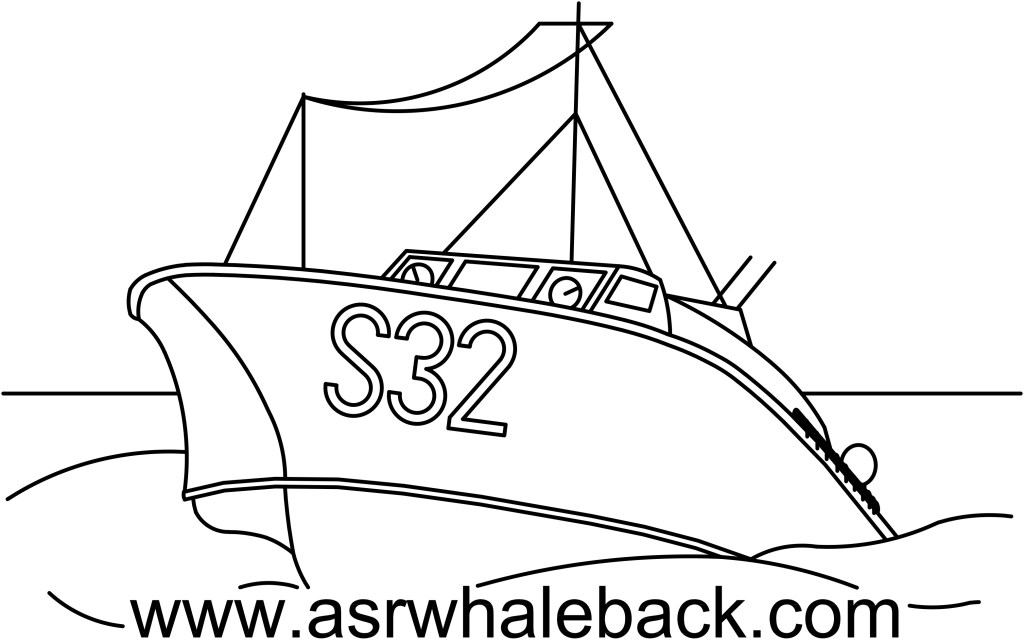
Please note that this is a work in progress as we research her story so if you have any information that might be of interest to us about her history or notice any mistakes please email admin@asrwhaleback.com
Originally ordered at a 70 foot MA/SB boat in September 1939 but this was changed to the 63 foot MA/SB on the 3rd July 1940 after successful trials of a 63 foot boat being Built for South Africa.
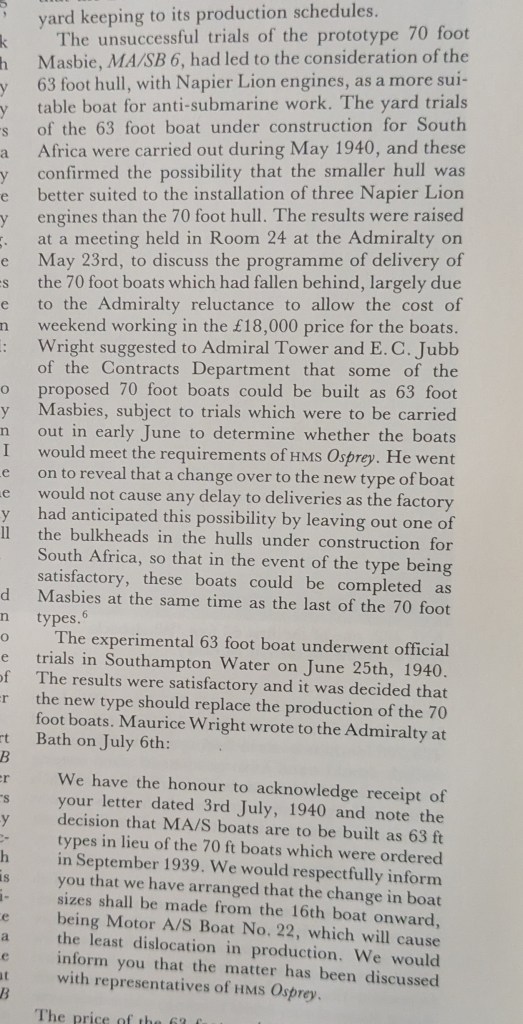
(Source page 133 in Fast Boats and Flying Boats by Adrian Rance published 1989)
She was ordered from and laid down at British Powerboat Company in Hythe as yard hull number 1571 being built with three 500HP Napier Sea Lion Engines to give her a top speed of 30 knots at max emergency power and 22 knots at max continuous power. She carried approximately 1140 gallons of 73 octane aviation spirit in 5 self sealing tanks just forward of her engines giving her a range of 350 miles but both the speed and range varied over time depending on her weight and armament fit
As built S32 was 63 feet long, had a beam of 16 ½ feet and a draft of 4 ½ feet and a hull made of wood with a hard chine.
As ordered she was intended as a Motor Anti-Submarine Boat and she was ordered with an armament of 1 x 20mm and 2 x 0.5” machine guns and 10 Depth Charges but this is likely to have changed throughout her military service either during her build or during various slipping events depending on local conditions and possibly the preference of her skipper between the need for less weight and hence speed and defensive/offensive firepower

British Power Boat Company Hull number as discovered in 2025 on the Stem of the boat in the Anchor locker in the bow

Details from RAF Marine Craft Class Directory Appendix G 63ft BPB Whalebacks compiled by Terry Holtham showing Hull number was MA/SB 32 the last of the original batch of 11 boats ordered by the Admiralty which ordered 7 subsequent boats to complete the eighteen 63 foot Whaleback boats they operated. The RAF ordered a total of sixty nine Type 2 Whalebacks with differences from the Admiralty ordered ones, the most noticeable difference from external being the totally different superstructure but the team is now also suspecting that there were a number of differences in their hull builds as well.

S32 probably soon after commissioning, note eight of the ten depth charges have been removed from the deck but the depth charge carriers are still in place in this photo to be replaced by a rolled up scramble net on each side to aid in the Air Sea Rescue work she was immediately assigned to after commissioning. The depth charges were probably removed to save weight so she gained some more speed and also no doubt helped with her sea keeping. In addition the armament appears to have changed from the 1 20mm and 2 0.5” machine guns that she was ordered with to four lewis guns perhaps showing the availability of weapons at this period of the war.
S32 was completed on 24th September 1941 and went straight to Dover in ‘Spitfire Alley’ with some reports saying she had a polish crew but no historical evidence of that has yet been found, more likely she was crewed by eight Royal Navy ratings and two Royal Naval Reserve officers and was used not for her Anti Submarine role but as a Air Sea Rescue boat.
She was fitted with a Type 134 Anti-Submarine Detection Investigation Committee (ASDIC) which is the historical name for what is now known as sonar. Sonar was designed to detect submarines by emitting sound waves and analyzing the returning echoes. See here for a short explanation of how it worked https://edencamp.co.uk/news/forgottenfriday-asdic/ (please note the project is not responsible for external linked content)
She would have also carried Very High Frequency (VHF) radios to talk to aircraft as part of her Air Sea Rescue role.
MA/SB S32 was assigned to the 1st Motor Anti-Submarine Flotilla under the command of Lieutenant Eric Corrie Denys Custance RNVR while this flotilla was under Dover Command for most of the time the boats operated out of Ramsgate.
On the 13th October 1941 S32 rescued her first aircrew member when she saved a Sergeant Pilot from the Royal Canadian Air Force from a British Fighter in the channel. Unfortunately the transcript with the information on it is not clear to fully read the name, does anyone know of a way to clarify who this was?

Almost immediately S32 was involved in another rescue on 21st October 1941 of Pilot Officer David Cooper Mitchell, from Giffnock, south of Glasgow flying with 65 Squadron who on that day destroyed a Me109 but was subsequently shot down into the Channel in his Spitfire Vb W3633. He was rescued from his dinghy some two hours later.
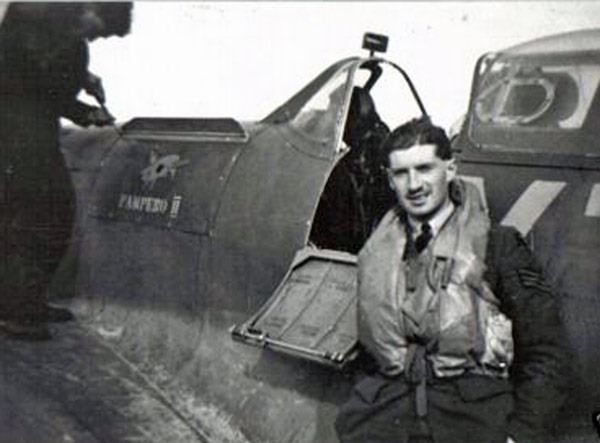

Very sadly, Mitchell was subsequently killed on 19th June 1944 whilst flying in Spitfire I R7065 of 57 OTU which collided with Beaufort W6540 over Rayburn Lake, Wingates Moor, Northumberland. The Beaufort landed safely.
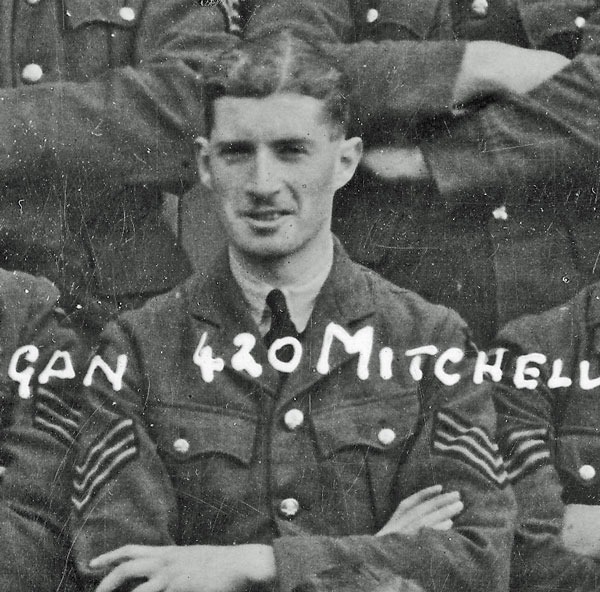
Additional information from https://www.bbm.org.uk/airmen/MitchellDC.htm#:~:text=On%2021st%20October%201941%20he%20destroyed%20a,rescued%20from%20his%20dinghy%20some%20two%20hours
On 27th February 1942 MA/SB S32 was involved with HSL 149 and Margate Lifeboat in the rescue of a crew of an RAF Douglas Havoc light bomber consisting of Sgt Pilot R.Batmen, P/O Offord, Sgt Pilot R.B.Madge and Sgt Air gunner Winpenny.
This appears to be the crash of Douglas A-20 Havoc Mk I Registration BB900 of 23 Squadron that took off from RAF Manston https://www.manstonhistory.org.uk on a proficiency flight and suffered engine failure but some reports whilst listing the Pilot as Pilot Officer Offord it also mention a fatality from this accident as one of the crew was never recovered but also give his name as F/Sgt James Gerard Shandley (950923) (Obs.) RAFVR so perhaps there were actually five crew on this flight, the normal four crew and an observer?
Information from https://asn.flightsafety.org/wikibase/275109 and the record in the Commonwealth War Graves Commission website for F/Sgt Shandley can be found here https://www.cwgc.org/find-records/find-war-dead/casualty-details/1806913/james-gerard-shandley/
Thanks to some excellent research by Neil Jordon we now believe that Sgt Pilot R B Madge is probably Sgt Robert Bruce Madge (1066745) RAFVR https://no23squadron.wordpress.com/category/robert-bruce-madge/ and P/O S.F. Offord RAFVR is possibly ‘Freddie’ Offord https://no23squadron.wordpress.com/2023/09/03/one-more-pilot-found/
Neil Jordon has also pointed out there is a record in the National Archives about this accident that sadly has not been digitised so if anyone else is interested in doing some further research for us and is at the archive we would be happy to hear the results https://discovery.nationalarchives.gov.uk/details/r/C17083170

This must have been a busy time for the boats of the 1st Motor Anti-Submarine Flottila as on the 9th May 1942 MA/SB S32 was again involved in a rescue but sadly this time in recovering a body from the channel in conjunction with sister boat MA/SB 24. Sgt Pilot Richard Arthur George Halliday R.A.A.F of 457 Squadron RAAF who was shot down returning from an escort mission in his Spitfire Vb AA851 aged 27 years and is buried in Aylesham Cemetery in Kent

Source of further information https://vwma.org.au/explore/people/515619 and again sadly no picture is know by the project of Sgt Halliday
Less than a month later on 1st June 1942 MA/SB 32 was involved with MA/SB 23 in the rescue of P/O J Richards RAAF after his spitfire crashed into the channel. At this time the project does not have any more details about this rescue.

In June 1942 S32 appeared in the Issue of Motor Boat and Yachting Magazine with a report on her and her use and a couple of photos clearly showing her service number

A very similar picture appeared in a newspaper (sorry it is not clear which one or an exact date) around this time but quite possibly from the same photo shoot. Despite the number being clearly visible on the fordeck and the boat cutting across its bow being a Royal Navy MA/SB the editor has mistakenly identified it as an RAF boat. What is even more amazing is this cutting was made and saved by an RAF serviceman on an HSL and now his son over eighty years later is heavily involved in trying to save this very boat!

About a month after MA/SB S32 appeared in the magazine article she was again rescuing airmen in the channel as on the 14th July 1942 MA/SB S32 was involved again with MA/SB 23 in the rescue of a Spitfire pilot shot who had ended up in the channel. This was P/O Shakleton but unfortunately without a christian name it has so far proved impossible to find out any more about this rescue at this time.

On 19th August 1942 MA/SB S32 again went to the rescue this time on her own when she saved Sgt. Pilot Evans who had been flying a Spitfire covering the beaches during Operation Jubilee better know at the Dieppe Raid designed to capture and hold the port for a short while to test tactics and to gather intelligence in preparation for the retaking of the continent.
It is believed that 106 RAF Aircraft were lost that day along with three Air Sea Rescue Launches. As part of this total number of aircraft lost there were 44 Spitfires and so far it has not been possible to determine which plane P/O Evans was flying but he was one of two pilots rescued by MA/SB from Ramsgate from the total of with 30 pilots reported as saved that day.

The other Spitfire pilot saved that day by MA/SB 24 was Squadron Leader Wilfrid George Gerald Duncan Smith DSO & Bar, DFC & Two Bars, AE who started the war as a Sargent but retired in 1960 as a Group Captain having been shot down again later in the war flying from Malta and again rescued from the sea this time by a Walrus Aircraft. He is credited with the following Victories, 17 enemy aircraft shot down, two shared destroyed, six probables, two shared probables and eight damaged. He was also the father of Iain Duncan Smith Member of Parliament and Leader of the Conservative Party.
On the 8th July 1943 MA/SB 32 recovered the body of Radio Operator Staff Sgt Carlo Galioto USAAF who had bailed out of his B17 Flying Fortress #42-107096 coded 30-K assigned to the 601st Bomb Squadron, 398th Bomb Group at RAF Nuthampstead, Hertfordshire which was returning from a raid against “No Balls” site around Humières in France where it had been hit by flack over the target (No Ball sites was the code word used to identify V 1 launch sites used to launch flying bombs against Britain)
Captain Kearie L Berry Jnr the pilot of the B17 and the tail gunner Sergeant Manuel C Ray were both recovered alive by RAF Air Sea Rescue launches from Goodwin Sands but the other eight members of the crew perished being Co-pilot Thornton, Navigator: First Lieutenant Walter Kruse, Bombardier: First Lieutenant Paul McCain, Flight engineer/top turret gunner: Staff Sgt Harry Bisping, Right Waist Gunner Staff Sgt George Pappajohn, and Ball Turret gunner: Staff Sgt Ralph Hess in addition to Staff Sgt Carlo Galioto
Further details can be found https://thepipeline.info/blog/2019/02/02/remains-of-aircrew-at-risk-as-goodwin-sands-impact-studies-unable-to-identify-crashed-military-aircraft/

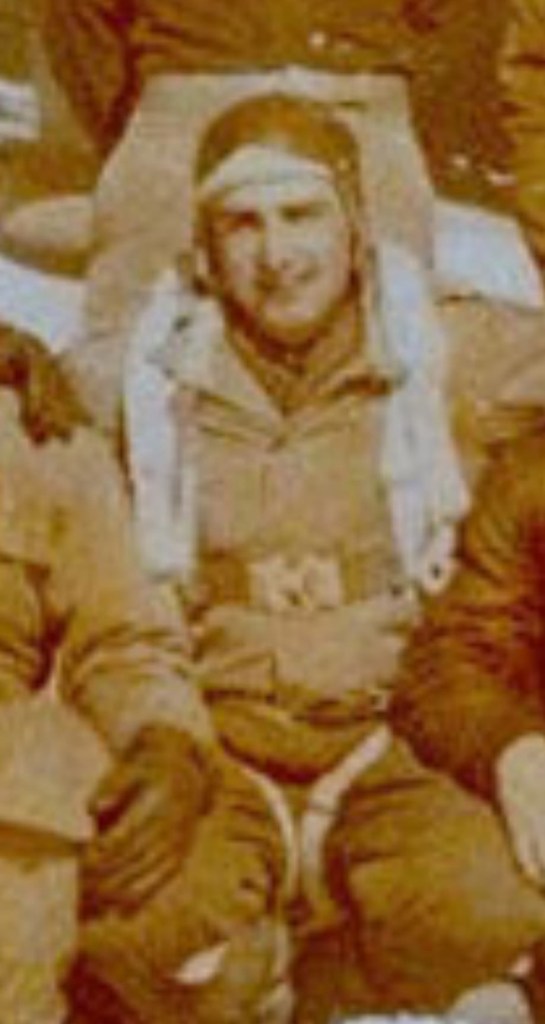
MA/SB S32 Final Rescue was of Three German Sailors on the 14th December 1942 who had been lost in a action in the channel on the night 11/12th December so presumably there ship had sunk and they had taken to a lifeboat. The rescue was a joint effort in conjunction with a Walrus Aircraft, her sister boat MA/SB 32 and HSL 2547 and 120. No details of the ship they where on that was sunk has been were recorded and the only ship identified that was sunk on the night of the 11/12th December 1942 was SS Trautenfels built in 1921 for the German Steamship Company Hansa in Bremen that struck a mine and sunk sank off the coast of Terschelling, in Netherlands so perhaps they came from this ship?

The following two photos show a similar scene to the magazine article above and shows two MA/SBs and two RAF HSLs visiting the same Air Sea Rescue Craft (ASR) 10 moored off Dover as S32 is shown visiting but as these photos are dated August 1941 a month before S32 was commissioned she is not the unidentified MA/SB. She is known to have worked with MA/SB 24 out of Ramsgate after she was commissioned. These photos also show that not only did the RN and RAF whalebacks work together but also the run out to and photoshoot with ASR-10 was performed several times during this period for the press.
The photos show some interesting detail that are different between the RN and RAF boats, not just the superstructure but also the armament with differing turret arrangements and the fact the RN boats retained two depth charges. The RAF boats have a rubber dinghy ready for use on the after deck while the RN boats have a wooden boat on their forward deck.


The ASR-10 (known as a “Cuckoo”) they are visiting still exists at The Scottish Maritime Museum at Irvine https://www.scottishmaritimemuseum.org/3d_collections/air-sea-rescue-craft-asr-10/ (please note the project is not responsible for external linked content)
This lifesaver was one of sixteen such craft built by Carrier Engineering of Wembley in 1941 to be anchored in the North sea and English channel to allow downed pilots to seek refuge prior to being rescued by an allied vessel.

An interesting shot of a HSL and an MA/SB side by side showing the large difference in the superstructure of each type despite them both being used in the ASR role at this point.

S32 second from right on the far row with 7 other MASB all appear to be without all but two depth charges and all to have a rubber boat on their deck to aid with the Air Sea Rescue roll replacing the wooden boat seen in the 1941 pictures above perhaps as a result of experience in the ASR role.
The photo is believed to have been taken in 1944 at HMS Fervent which was a Royal Navy shore base established in Ramsgate, Kent (can anyone please confirm if the port is correct?)
Sept 1945 to Admiralty Small Ship Disposals as ‘excess to requirements’ after the war in Europe ended.
The Following information has been Extracted from the ‘RED LISTS’ of minor war vessels in home waters for MA/SB S32 to show her military service history
| 21 Sep 41 | To Southampton to be fitted with ‘ASDIC’ and R/T having been allocated to Dover command for air sea rescue duties under SMBA 1014 dated 17 Sep 41 |
| 2 Nov 41 | To Dover to operate on air sea rescue duties. |
| 9 Feb 42 | Taken in hand (TIH) for slipping repairs at Ramsgate – complete 16 Feb 42. |
| 17 Арг 42 | TIH for slipping repairs at Ramsgate – complete 23 Арг 42 |
| 12 Jun 42 | TIH for slipping repairs and drying out at Ramsgate – complete 28 Jun 42. |
| 8 Oct 42 | TIH for ‘fittings’ at Ramsgate – complete 13 Oct 42. |
| 3 Jun 43 | TIH for repairs at Ramsgate. |
| 6 Jun 43 | Operate from Ramsgate on air sea rescue duties with numbers 23-26, 29,31,37 & 38. |
| 13 Jun 43 | Numbers 23-25, 29, & 31 to Dover. Numbers 26, 33 & 38 operate from Ramsgate. No 32 at Ramsgate for repairs. |
| 20 Jun 43 | To Dover to operate on air sea rescue duties. |
| 27 Jun 43 | To Ramsgate to operate on air sea rescue duties |
| 4 Jul 43 | To Dover to operate on air sea rescue duties. |
| 1 Aug 43 | To Ramsgate to operate on air sea rescue duties. |
| 15 Aug 43 | To Dover to operate on air sea rescue duties. |
| 18 Jun 44 | To Ramsgate to operate on air sea rescue duties. |
| 5 Sep 44 | Announcement in para 2 of SMBA 2440 : ‘ MASB’s 22-29,31 – 35,37 & 38. Pending a decision whether these vessels will be laid-up or brought to produce, such vessels as are still in service will so remain but work on them is to be so restricted to normal maintenance and such minor repair work as is within the capacity of the Coastal Force Maritime Staffs. No further A and A’s are to be undertaken on these vessels.’. |
| 16 Sep 44 | AM161335 Approval to lay-up in reserve – Cat C |
| 1 Oct 44 | Remain at Ramsgate to be paid – off. |
| 8 Oct 44 | Unallocated. |
| 13 Oct 44 | SMBA 2583 Paid – off Cat C. |
| 15 Oct 44 | To Poole. |
| 23 Oct 44 | De – equipping |
| 9 Mar 45 | SMBA 2675 – Approval to dispose of hull |
| 14 Sep 45 | Handed to DSCD for disposal |
| 23 Sep 45 | Reserve fleet – Poole for disposal with numbers 23, 24, 26 – 29 (last reference) 31-34 and 36 – 38 |
Acronyms used above
- A and A
- ASDIC An early form of Sonar used to detect Submarines
- DSCD Director Small Craft Division
- R/T Radio Telephony allowed for direct voice communication
- SMBA Special Military Branch Acquaint
1945 House Boat named Roxanne probably on the Thames but if anyone has any information of this time period the team would like to hear from you please email admin@asrwhaleback.com
1960s Refitted started but not finished to return her to as private yacht and renamed Fervent
1966 – Bought by Peter J Wallis for £3750 from a broker at Penton Hook Yacht Basin, Stains Lane, Chertsey on the 31st March 1966. She had been partly converted with three Perkins S6Ms engines with 2:1 reduction gearboxes swinging 23.5 x 23 inch props giving her a top speed of 16 knots on three engines and 12 knots on two according to her new owner.
The engines were located under the wheel house with eight foot prop shafts from trucks connecting to the original as built prop shafts to drive the propellers, The original engine room had already been converted into an after cabin from her the as a houseboat and large port lights and portholes were cut into the forward cabin to all light into the cabin again as part of her house boat days
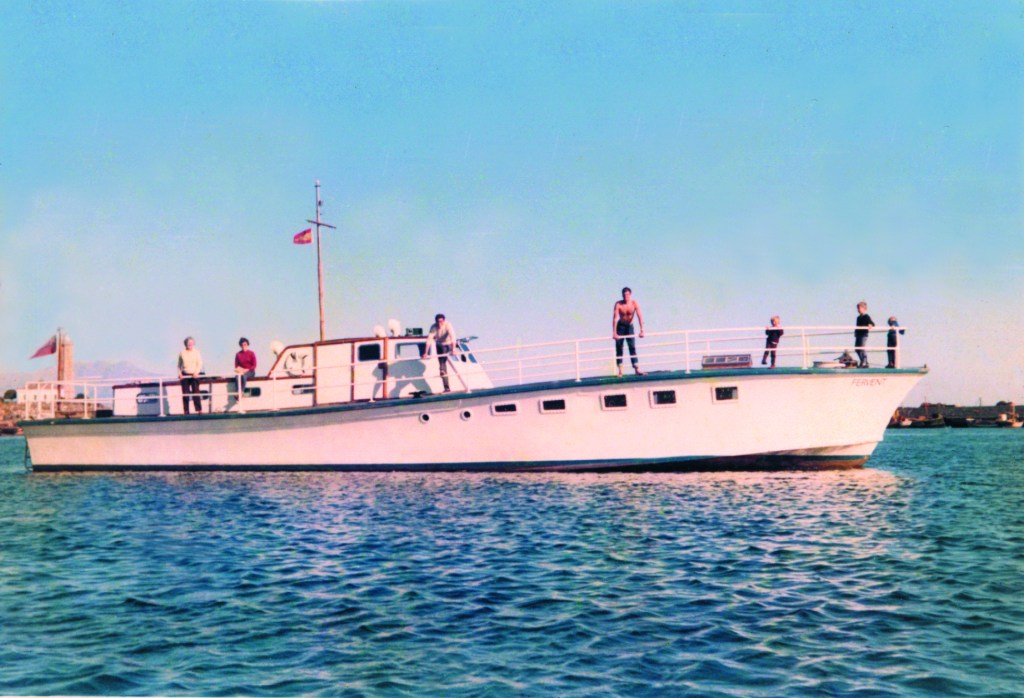
Peter completed the conversion and then sailed Fervent down to Gibraltar with his wife Margaret, Son John 5, and daughters Angela 4 and Libby 3 on board
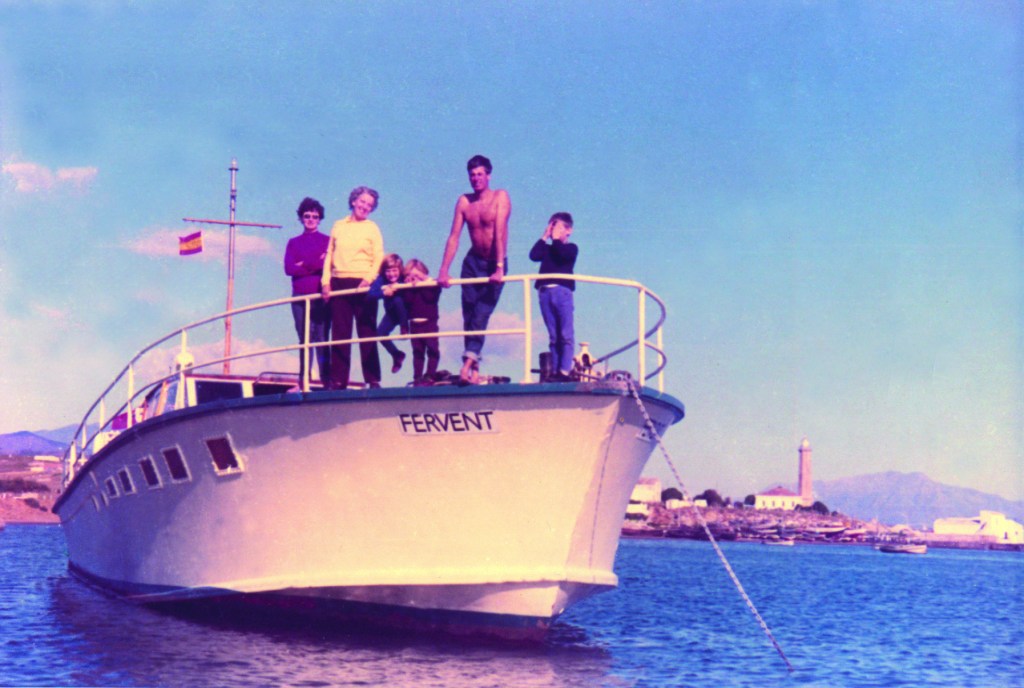
While based in Gibraltar she was used as a diver support boat and for hire as a fishing boat.
One of her more unusual uses was when a 28 year old American David Smith used her as support when he swam across the Straights of Gibraltar from the North African Coast to Europe on July 1967
This link to a short film that British Pathe News made on swim showing Fervent towing a anti shark cage that David Swam in can be seen here https://www.britishpathe.com/asset/212266/
Also Dr David Smith has details of the swim and some pictures taken by Life Magazine at the time on his website https://adventuresmith.net/swimming-from-africa-to-europe/
The link to the article in Life Magazine 21st July 1967 on Page 31 can be found here https://books.google.co.uk/books?id=7VUEAAAAMBAJ&pg=PA30&dq=David+smith+swim+gibraltar&hl=en&sa=X&ved=2ahUKEwirkbi29ISPAxU6VEEAHdHmC0sQ6AF6BAgFEAM#v=onepage&q=David%20smith%20swim%20gibraltar&f=false
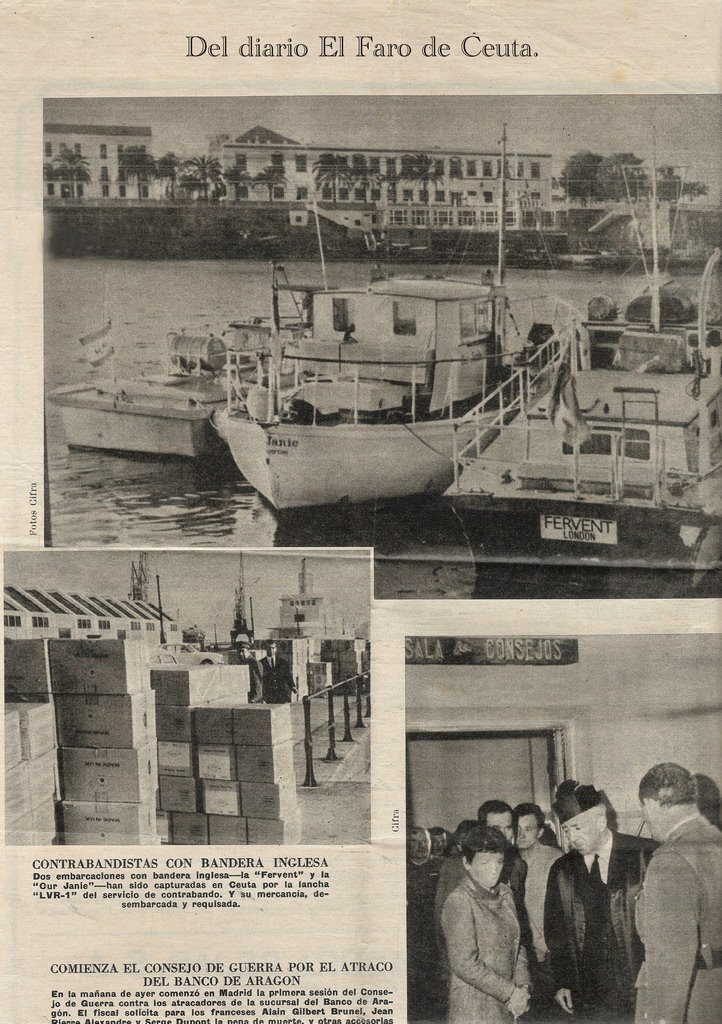
1967 Impounded for smuggling and taken to Ceuta a Spanish enclave on the African coast
Fervent tied up alongside on the left after being impounded on the night of the 7th/8th December 1967 with ‘Our Janie’ in the middle, another smugglers boat captured on the same night, with the Special Fiscal Surveillance Service boat LVR-1 who captured them both on the far right
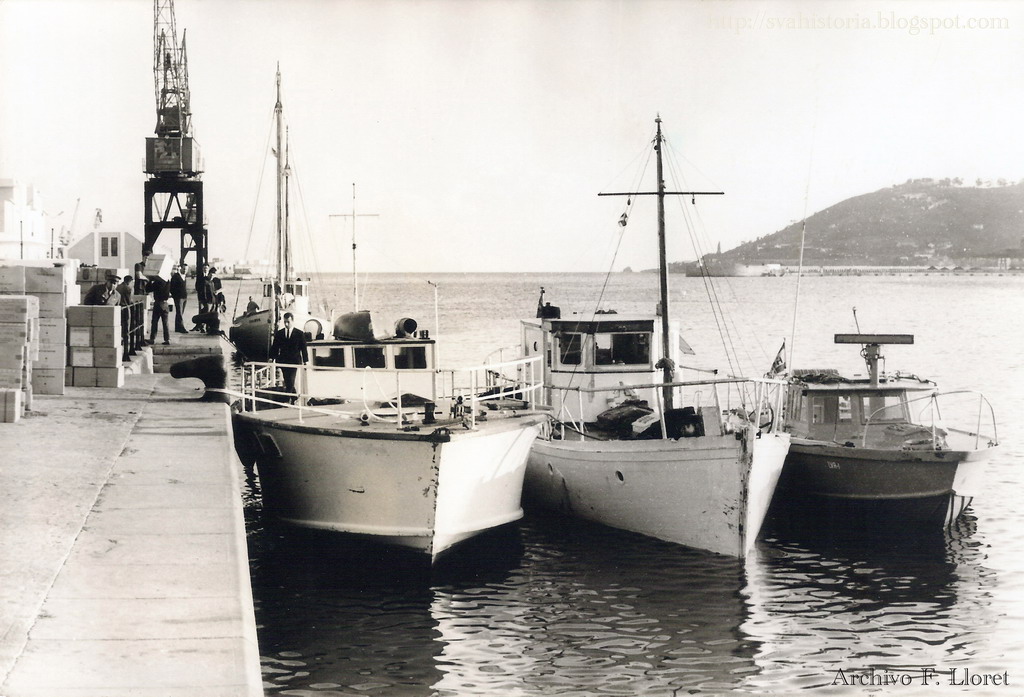
Newspaper report of the impending of Fervent with a stern picture of the three boats and the contraband on the dockside
1968 Named Crismar and owned by a Army Spanish Colonel
1974 Bought by Gordon Bland and still named Crismar to use as a deep sea shark fishing shark boat and had a flying bridge added on top of the wheel house to aid with the fishing.


1980s Gordon repurposed Crismar as a fish and chip restaurant in Estepona on the southern Spanish coast and named her “The Codfather” and was frequented by Rod Stewart amongst others but retained the superstructure under the awning and the painting of two dolphins jumping on either side of the bow. Note that the large portlights present when Peter Wallis bought her in 1966 have been replaced with smaller rounded corner ones perhaps during the ownership of the Spanish Colonel?
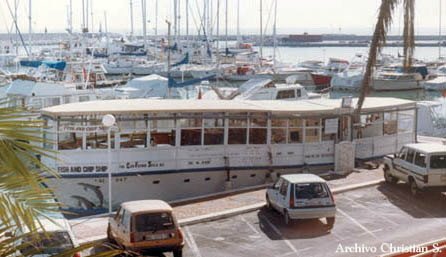
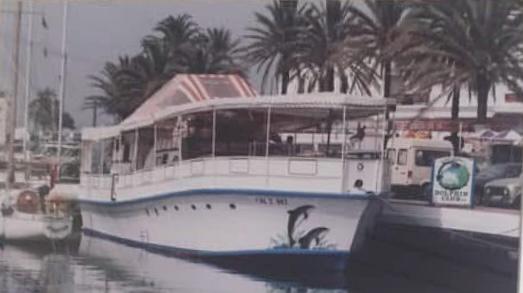
The fishing boat superstructure with flying bridge and aft saloon are visible in this photography while she was being used as the Cod Father fish and chip shop.
1996 Bought by Hector Sheppard-Capurro to restore and towed from Estepona to Gibraltar using his wartime built Harbour Defence Motor Launch (HDML) number 1301. Hector also owned a wartime Rescue and Target Towing Launch (RTTL) 2753 built by Vosper Ltd, Portsmouth at this time.
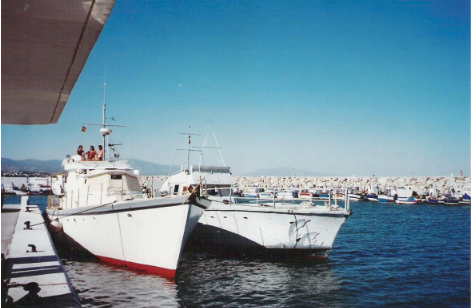
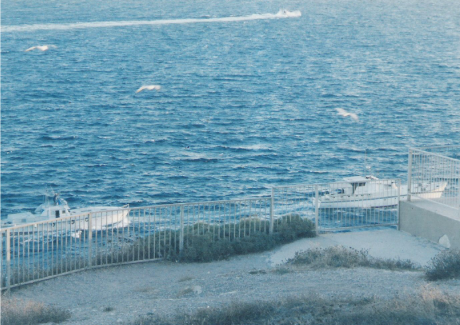
Hector replaced her rotten superstructure in a similar style to the previous post-war outfit but using a Armoured window in the centre of the wheel house probably from a Harbour defence Motor Launch with the same source probably donating the ladder attached to her transom. He did not replace the flying bridge that Gordon added to her so her lines were similar to the time that Peter Wallis owned her in 1966.
Hector also re-fittered her with new engines in the original engine room space with a pair of Ford 2725 6 cylinder diesel engines of 136hp each at 2600 rpm in each of the wartime ‘wing’ engine positions and a diesel powered generator on the third middle engine bed. The two Ford engines were connected by a 2.5:1 transfer box to 25 x 21 propellers (25 inch diameter and 21 degree pitch) He also installed three 140 litre diesel tanks at the back of the engine room to supply fuel. The new engines replaced two GM Diesels the were in place in the after engine room when Hector bought her, currently the project team are unsure if the GM engines were installed by Gordon Bland or the Spanish Army Colonel.
The original teak timbers on deck was over boarded with 3/4″ marine ply
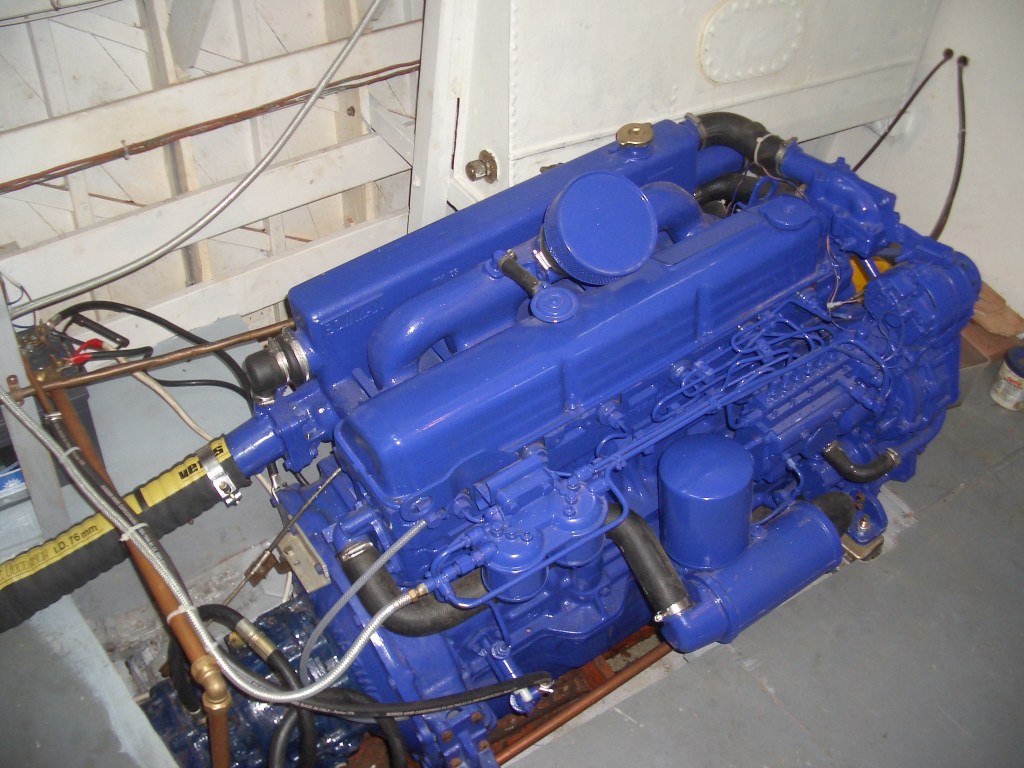
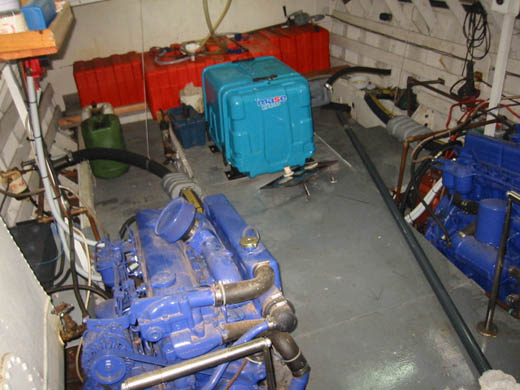
Hector did rename her with references to her ASR past by naming her “32” in honour of her military service (photos kindly provided by Simon Philips)
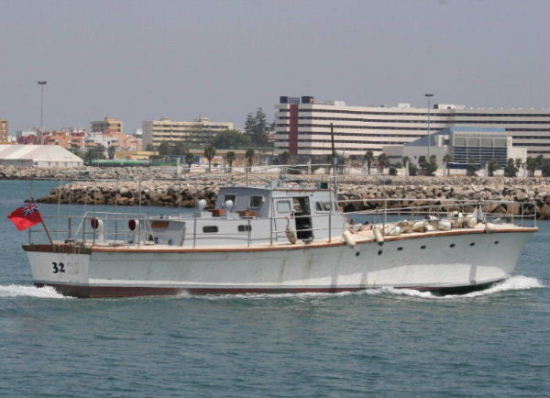
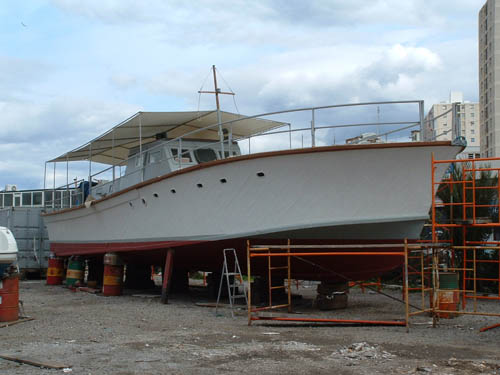
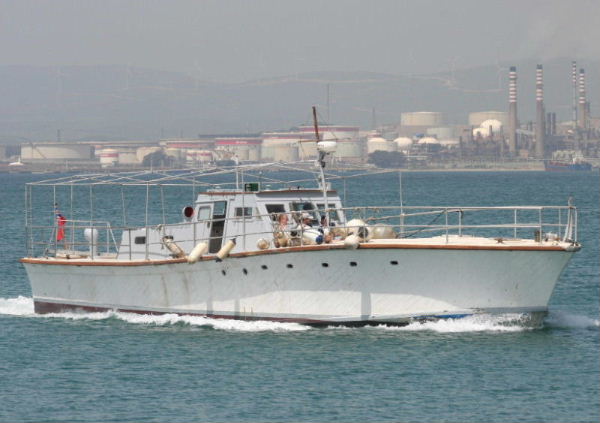

2007 was bought by a local business man in Norfolk who had originally intended to sail her back home much like Peter Wallis had sailed her out 41 years before but he soon realised that that was not practical and decided to have her shipped back to Southampton as deck cargo on a Russian freighter
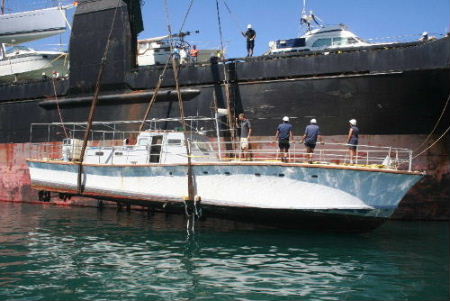
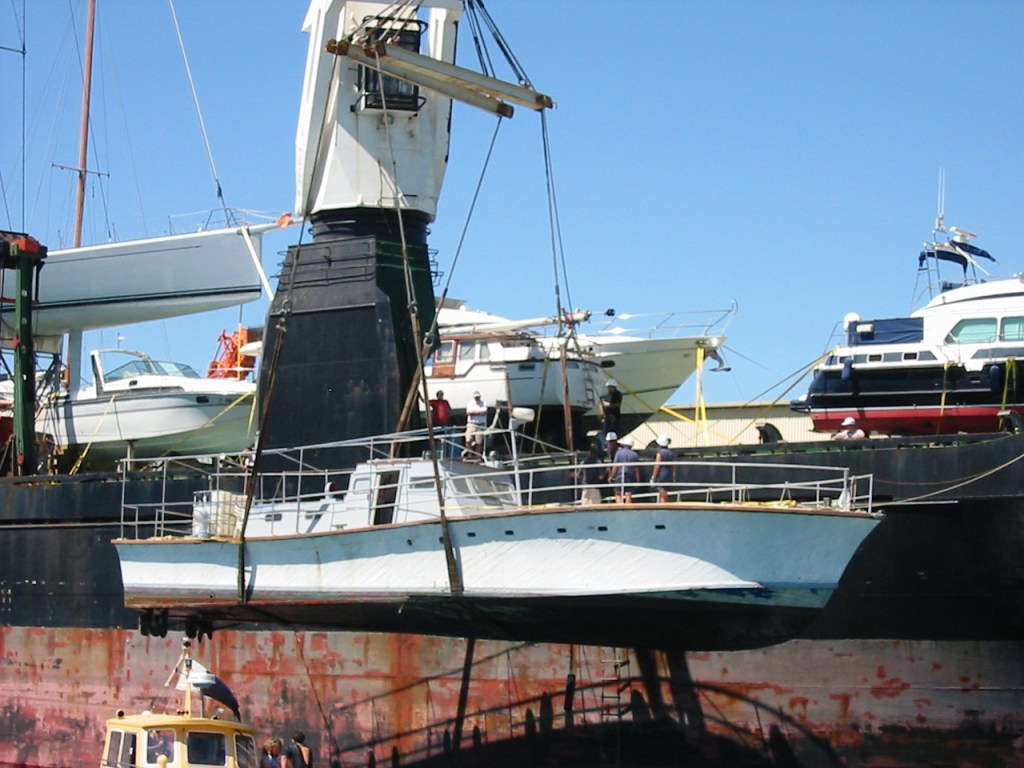
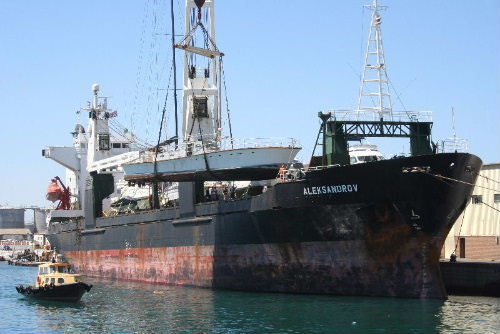
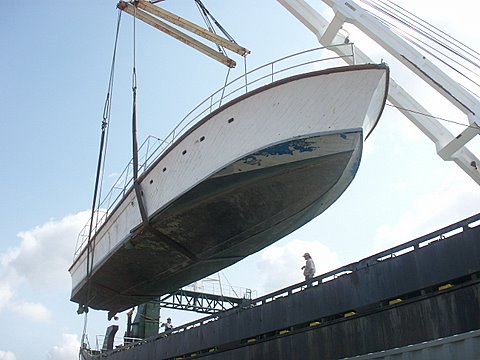
Unfortunately during the load process S32 was damaged due to the two few slings being used and them being positioned in the wrong places as the shipping company were more use to handling Glass Reinforced Plastic hulled boats that are more forgiving of miss handling that S32 wooden hull.
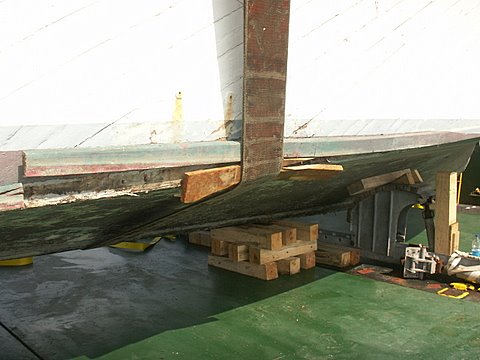
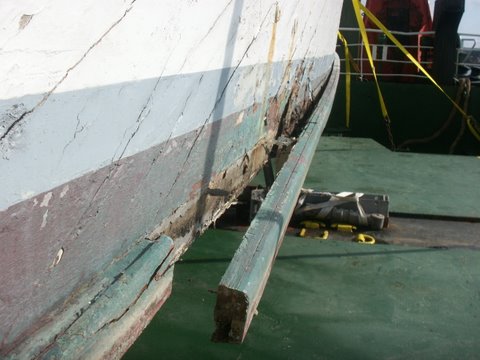
This damagenecessitated that S32 was road transported to Lowestoft for repairs rather than the original plan of saying her back from Southampton to her new home on the broads
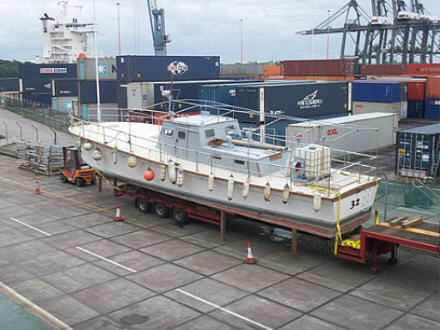
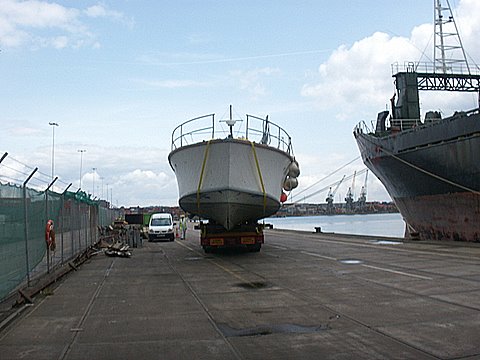
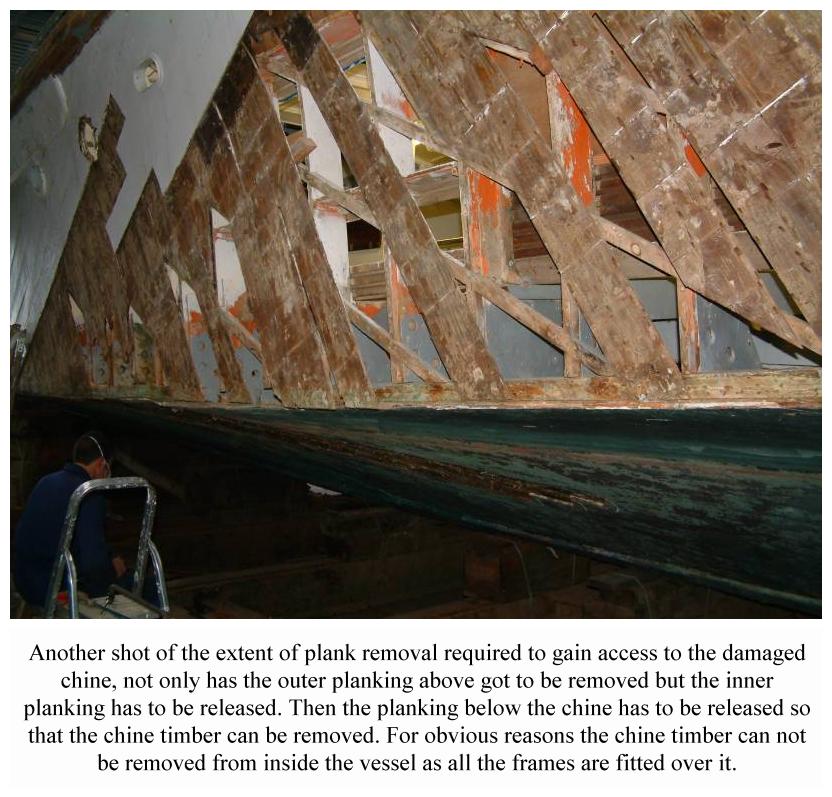
Once at Newsons boatyard extensive repairs were preformed with the diagonal planking having to be removed in large areas ro allow access to the frames than required attention and then the planing being replaced.


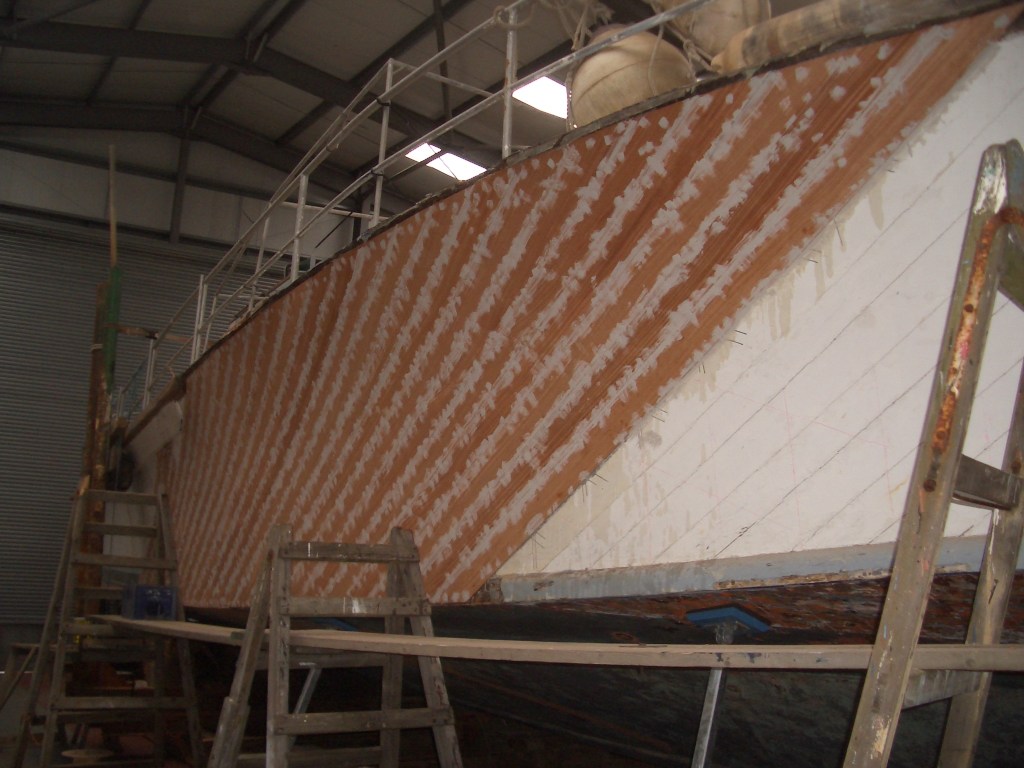


After the repairs where finished the new owner sailed her to his house on the broads and here she can be seen on her new moorings
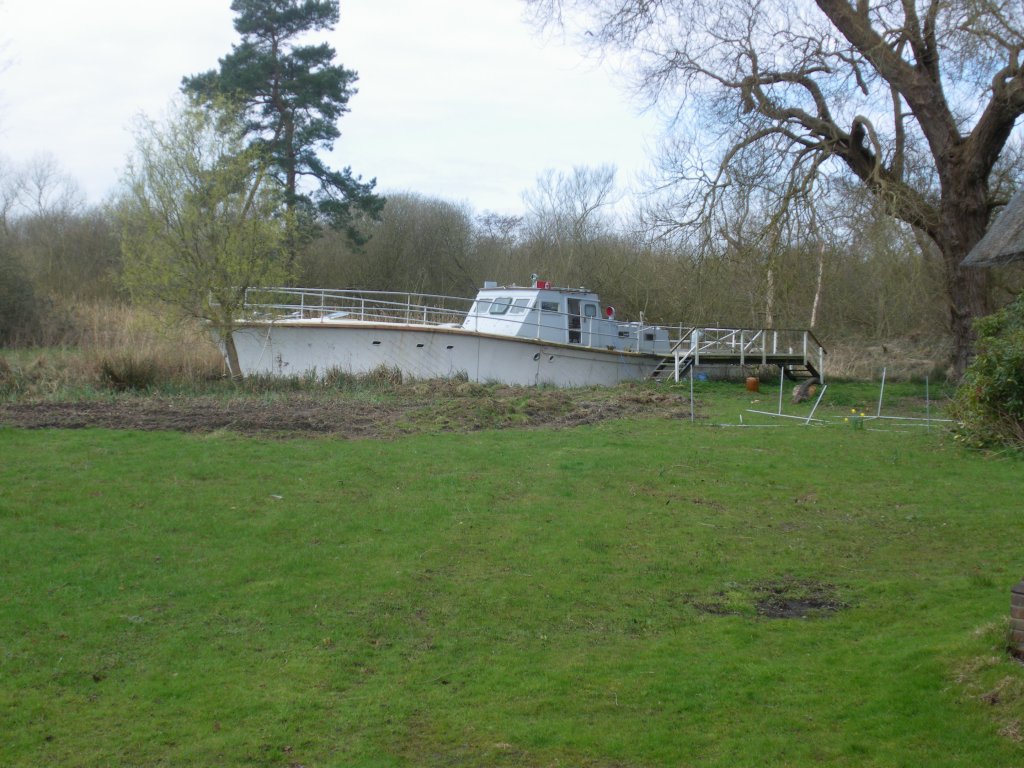
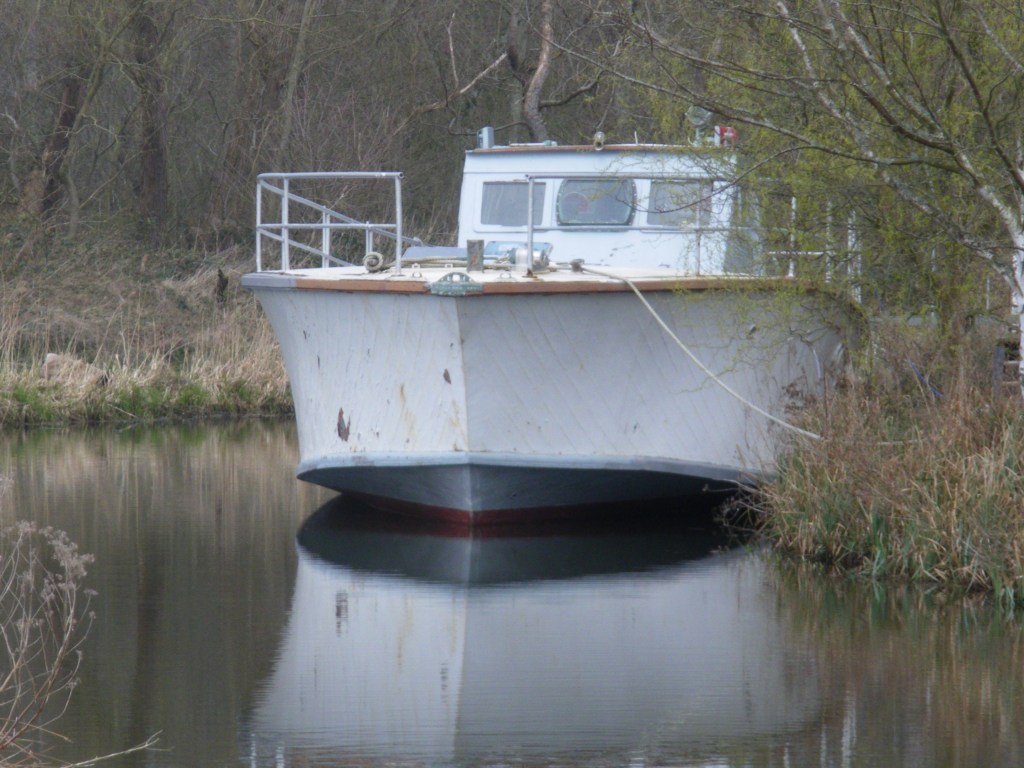
Where she would slumber gently for the next 17 years
2023 After a number of years of decline, S32 was located by the project team and set about trying to recover her.
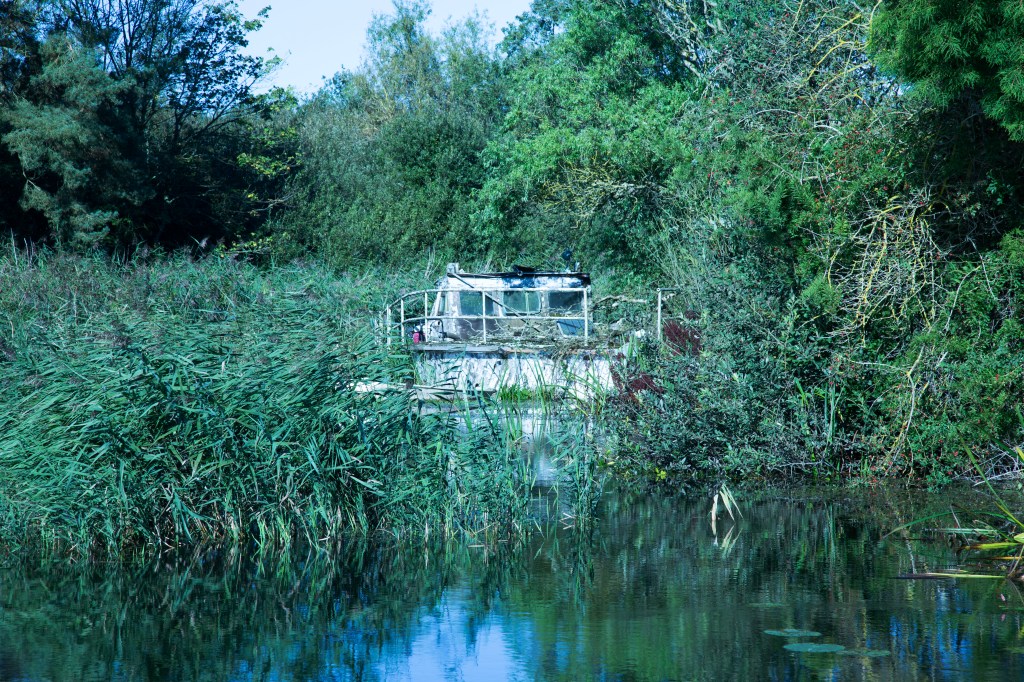
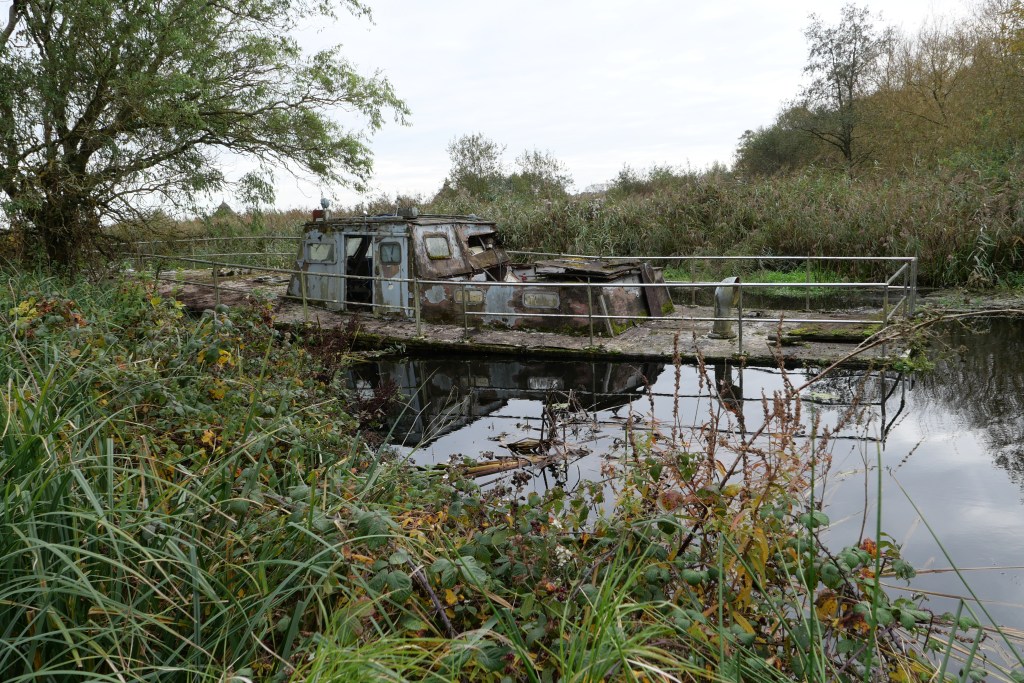
January 2025 S32 refloated
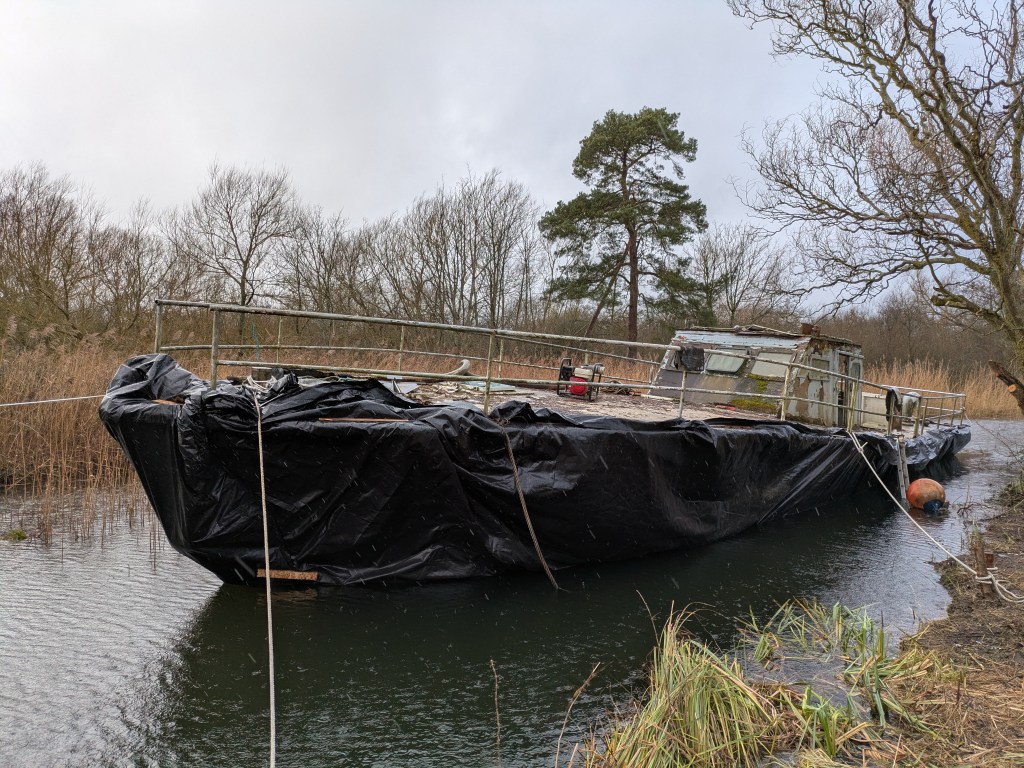
2025 Registered to Peter Horscroft temporary on behalf of the recovery team until a charity can be set up to accept its ownership and placed on the National Historic Ships Register https://www.nationalhistoricships.org.uk/register/3737/masb-motor-anti-submarine-boat-s32
On the 14th May 2025 MA/SB S32 was towed to Salhouse Broad for Temporary Mooring
Exiting the dyke she had laid in since 2007
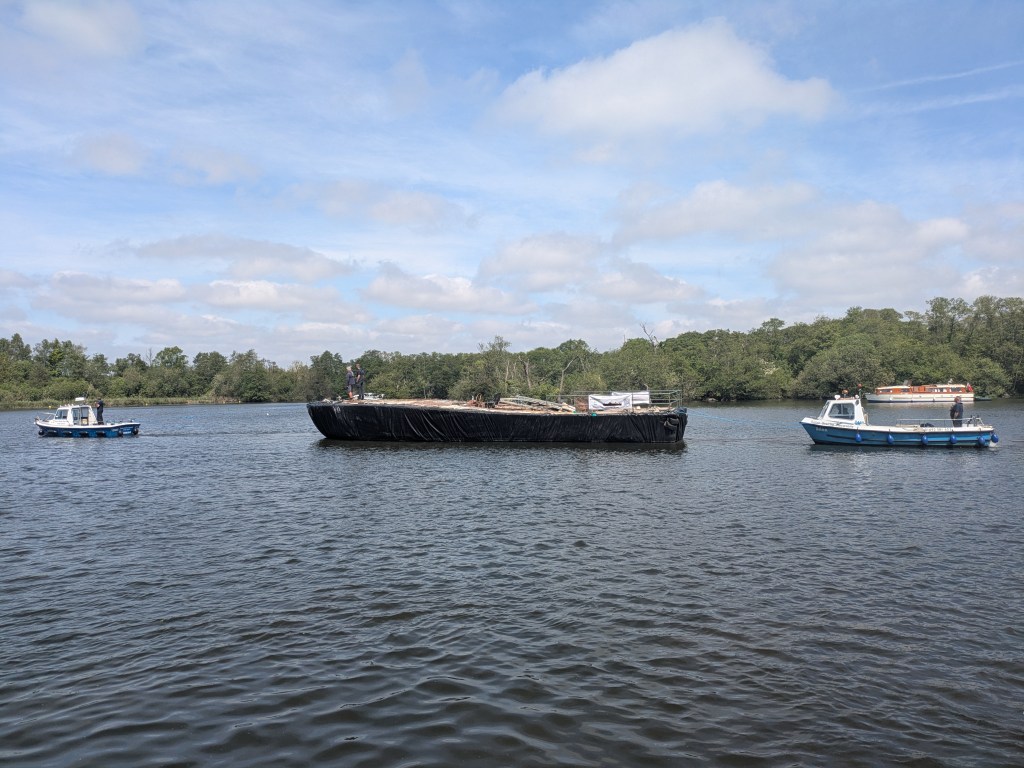
Crossing Salhouse Broad at the end of the tow
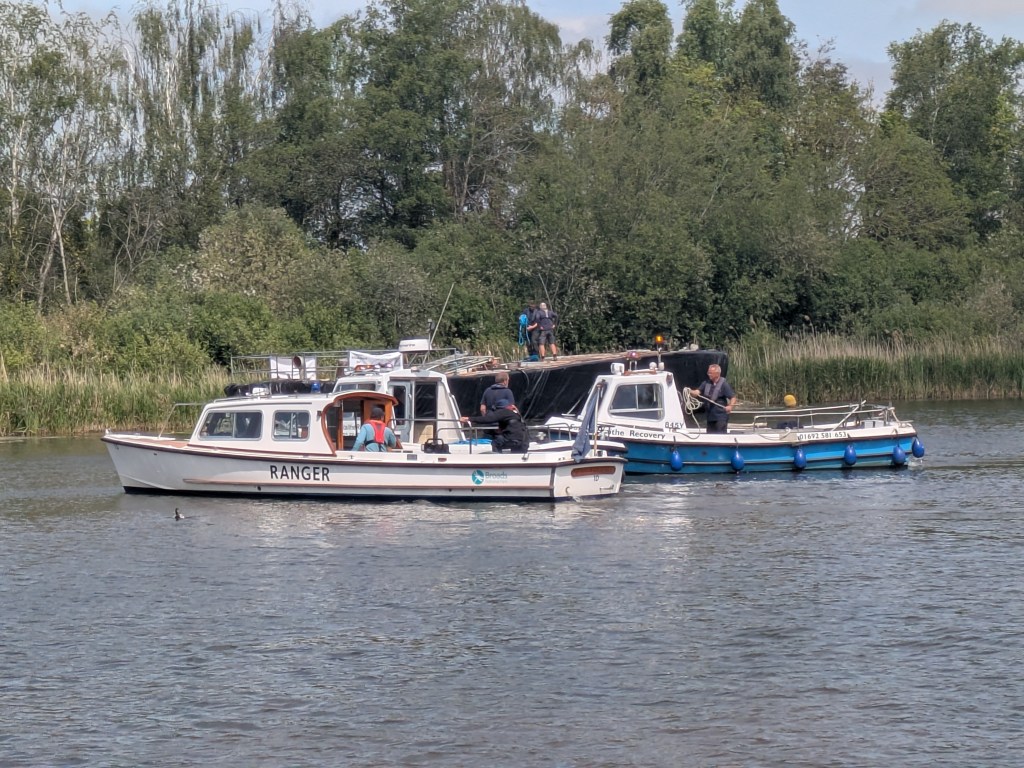
The Broads Authority Ranger and the two Sutton Boatyard tow boats confer together in front of S32 after the successful tow to Salhouse Broad and her being mud weighted into position.
For more information and pictures of the tow please see the BLOG
 ASR Whaleback S32